
Website Redesign Cost: What Actually Drives the Budget
A redesign budget is decided long before anyone opens a design tool. Content, integrations, decision-making and the number of pages you have to earn trust on are what actually set the number.

Clients ask what a website redesign costs. We give a number, and then they tell us it is more than they expected.
This is not usually a disagreement about our rate. It is a disagreement about what is included. The quote was built around one definition of the work; the expectation was built around another.
Having run hundreds of these projects, the budget is decided by a small number of variables, and almost none of them are the thing everyone assumes.
The variables that actually set the number
1. How much content has to be produced, not redesigned
Design and content are quoted separately all the time, and it hides the biggest cost driver in a redesign.
Redesigning a page means a new layout, new type, new spacing, new components. Rewriting a page means someone has to think about what the page is for, decide what the visitor should do, write the words, get them approved, and produce the images.
On a marketing site, content production is frequently 30–50% of the total budget, and it is the part most likely to slip. A design can be signed off in three weeks. Copy that has to be legally reviewed, product-reviewed and approved by five stakeholders can take three months.
2. How many integrations have to survive
A static page and a product catalogue are different projects. Every integration adds an owner, a failure mode and a round of testing:
- A CMS with structured content types
- An eCommerce platform with real inventory
- A booking or scheduling system
- A CRM or marketing automation platform
- A payment provider
- A third-party support or chat widget
- An analytics stack that has to be right from day one
Each one is a small dependency on someone else's system. The design cost barely changes; the coordination cost does.
3. How many pages have to earn trust on their own
A site with twelve genuinely distinct pages is a different exercise from a site with twelve pages that are variations of two templates.
Every distinct page type needs a design, a responsive behaviour, an edge case, a content model and an accessibility pass. The first three page types are comparatively cheap. The ninth is not, because by then you are not reusing a template — you are inventing one.
This is why "we have 40 pages" is not a meaningful number in a quote. "We have 40 pages across six distinct page types" is.
4. How much redesign is actually happening
There are three quite different things people call a redesign.
A reskin — same structure, same content, new colours and type. Cheap, fast, and usually the wrong answer if the site is underperforming, because the performance problem is rarely the paint.
A rebuild of key journeys — the structure, content and design of the highest-traffic paths change; everything else is migrated. This is where most of the value is, and it is usually 40–60% of the cost of a full redesign.
A full replatform — new IA, new content model, new CMS, new everything. The most expensive, and the right answer less often than people think.
5. How many decisions have to be made, and by whom
This is the variable nobody quotes and everybody pays for.
Every time a decision needs someone who is not in the room, the project stops moving. Waiting for approval is not a design cost, but it is a schedule cost, and schedule cost becomes budget cost the moment the timeline slips.
The single most effective thing a client can do is name one person with the authority to decide, and make it that person's job to decide.
We have watched projects with beautifully prepared design reviews that took three weeks to get a decision on a two-line change. We have also watched projects where a design director made every call in a daily fifteen-minute standup and finished in half the time.
6. What happens after launch
A redesign is not finished when the site goes live. There is at least a period of:
- Redirect mapping and verification
- Analytics and event tracking validation
- Search Console verification and indexation watching
- Content migration QA
- Training the people who maintain it
- A stabilisation period where bugs surface
If the budget does not include this, it will be spent anyway — usually at the worst possible moment, when the team is focused on launch.
Where the money usually leaks
Four patterns we see repeatedly.
Redesigning pages nobody uses. Traffic analysis, not the sitemap, should decide what gets redesigned. We routinely find that 40–60% of a corporate site's pages receive almost no traffic. Redesigning them is not a failure — but it should be a conscious decision, and it should be cheap.
Treating the design phase as the project. A long design phase with a big reveal and no build commitment is expensive. Short cycles with a reviewable build are cheaper and produce better work, because the feedback arrives while it can still be acted on.
Writing copy last. If the content is written after the design is signed off, the design gets bent to fit the words. If the words come first — even rough ones — the design gets built around what the page actually needs to say.
Not budgeting for content production. Covered above, and it is the one we would correct first in any project we were inheriting.
How to reduce the number before you start
You have more control over this than you think, and almost all of it comes from scoping decisions rather than negotiating fees.
- Decide what success looks like before you decide what to build. If the goal is more qualified enquiries, two well-built landing pages will outperform a redesigned forty-page site.
- Audit the existing traffic first. Redesign what earns attention. Migrate the rest.
- Agree on one decision-maker. Then make it easy for them to decide by bringing options rather than questions.
- Bring content forward. Even rough copy changes the design brief substantially.
- Phase the work. A first phase that rebuilds the two journeys that matter, and a second phase for everything else, will keep the budget flexible and the risk contained.
- Fund the aftermath. Launch support is not optional. Budget it and it costs a fraction of what it costs when it is unplanned.
The number to ask for
When a client asks what a redesign should cost, we ask a different question first: what is the site currently doing, and what should it do instead?
Because a redesign with a clear objective can be scoped tightly and honestly. A redesign without one can only be priced generously, and a generous price for an undefined project is how agencies end up delivering a beautiful website that changes nothing.
If you have a site that needs work and a budget to work within, tell us the objective and we will tell you honestly what it takes. Sometimes the answer is a full redesign. Sometimes it is a $500 fix to one component that is costing you a third of your conversions.
Keep reading
Related articles
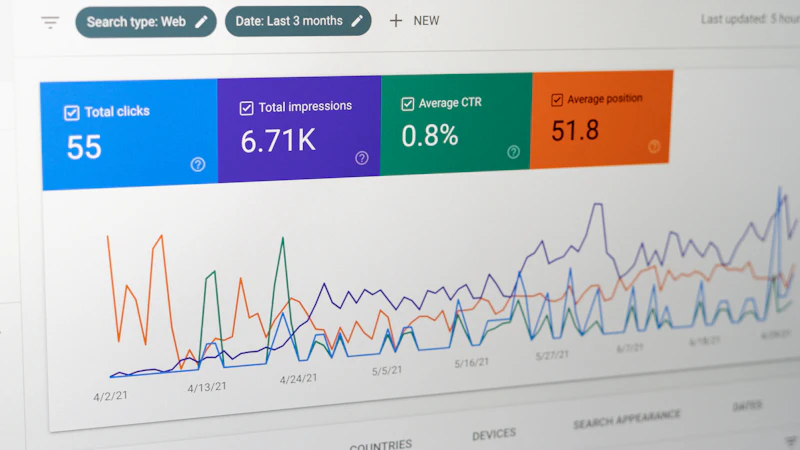
Core Web Vitals: The Three Numbers That Decide Your SEO
LCP, INP and CLS are not developer trivia. They are the three numbers that decide how your site feels, how it ranks, and whether anyone waits.
Local SEO for Service Businesses: The Map Pack Playbook
The map pack takes more than half of clicks on a local query. Here is the playbook we use for service businesses: the three proximity signals that…

AI Search Visibility: Getting Cited by ChatGPT and AI Overviews
AI answers are replacing clicks. Being cited in them is a new discipline — and it is won with structure, clarity and quotable answers, not with…
Next step
Have a problem like this one?
Tell us about it. We will tell you honestly whether design is the right lever.