
Local SEO for Service Businesses: The Map Pack Playbook
The map pack takes more than half of clicks on a local query. Here is the playbook we use for service businesses: the three proximity signals that matter, and the page structure that supports them.
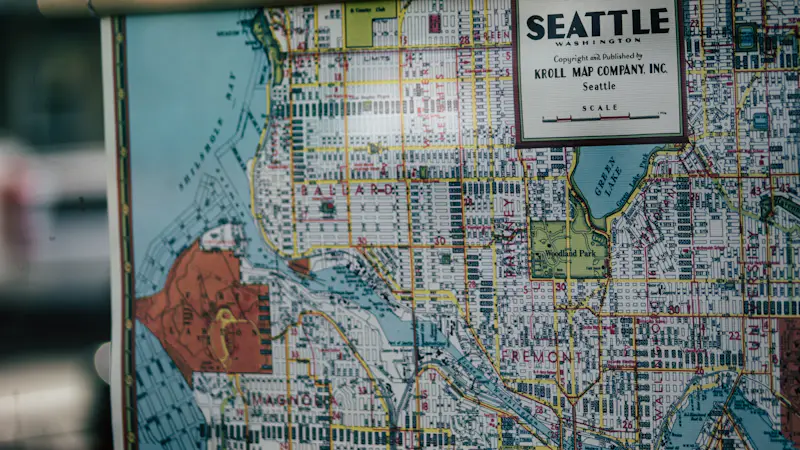
For a service business — plumbing, roofing, dentistry, law, HVAC — the local map pack is the most valuable thing on the results page.
On a local query, the map pack takes the majority of clicks, and the organic results below it are effectively a supplement. If you are not in the map pack, you are not really competing for that query.
This is the playbook we use. It is not complicated, but it is specific, and most of it has to be true before any clever tactic matters.
How the map pack is decided
Google does not publish the exact formula, and anyone who tells you they do is guessing. What is well established, and what the ranking systems describe, is that the map pack is driven by three things:
- Relevance — does the business actually do this service in this area?
- Distance — how far the business is from the searcher, or from the centre of the searched area?
- Prominence — how well established the business appears to be.
For most service businesses, the practical order of work is: relevance through the profile, prominence through reviews and citations, and distance — which you cannot change, but which you can influence by having genuine location pages in the areas you actually serve.
The Google Business Profile is the centre of it
Most local search problems are Google Business Profile problems. The profile is what feeds the map pack, and it is under-optimised by almost every business we audit.
Completeness before optimisation
An incomplete profile loses to a complete one before any other factor is considered. Check these:
- Primary and secondary categories. The primary category is a strong relevance signal, and businesses routinely pick a broad one (Plumber) when a specific one (Emergency Plumber, Roof Repair) is available and accurate.
- Services listed with real descriptions, not just names.
- Accurate service areas. Do not list areas you do not cover. Do not leave the service area blank if you travel.
- Hours, including special hours. Wrong hours generate one-star reviews and lost calls.
- Website URL, appointment links, and the attributes that matter — payment methods, accessibility, amenities.
- A real, current, professional photo set. Not a logo and one blurry exterior.
Photos, and why they move the needle
Businesses with regular, current photos are classified by Google as actively operating, and they also convert better from the profile itself. We recommend a photo every week or two: completed jobs, the team, the vehicle, the premises, the equipment.
Before-and-after is the format that performs best, because it is also proof of work.
The description
Google has said for years that it does not use the business description for ranking, and we believe that as it applies to ranking. The description still affects relevance matching in subtle ways, and it matters commercially — it is the paragraph a customer reads before deciding to call.
Write it plainly: what you do, where you work, what makes you different, and how to reach you. No keyword lists.
Posts and updates
Google Business Profile posts are free, and the recurring updates are a genuine prominence signal. Most businesses post once at opening and then never again. A weekly or fortnightly update — a completed job, a seasonal tip, an announcement — keeps the profile active.
Reviews are the prominence engine
Nothing moves prominence in local search like a steady flow of genuine reviews, and nothing damages it like a burst of suspicious ones.
Velocity and balance matter more than total
A business with 40 reviews arriving steadily over two years outranks a business with 120 reviews that arrived in a single week a year ago. Recency, distribution and a natural-looking pattern all carry signal.
The ask
The highest-performing review request is made at the moment the service is complete and the customer is satisfied — not three weeks later by email. A short message from the person who did the work, sent while the customer is still on site, is worth several automated requests.
And the friction has to be low. If getting to the review form takes three taps, most people will not do it.
Respond to every one
Especially the bad ones. A thoughtful, non-defensive reply to a one-star review does three things: it shows future readers how the business handles problems, it often prompts the reviewer to update, and it creates a visible record of responsiveness that competitors without one cannot match.
Never argue. Acknowledge, apologise for the experience, explain what you changed, and invite a direct conversation.
The website side: location pages that are not template spam
This is where local SEO usually goes wrong.
One page per real service area
If you genuinely serve a town, it deserves a page. If you have one template page for every town in a list of forty, it will be ignored and may hurt you.
A real location page contains things that are actually different: the neighbourhoods you cover, local landmarks and building types you work in, local codes or council areas, local seasonal conditions, examples of your work nearby, and the specific services you offer there.
Prove you operate there
The strongest signal you can give is genuine and specific: a project completed in that area, with a photo, a street reference and a date. Not a stock photo of a neighbourhood.
Keep the Business Profile and the site consistent
Name, address, phone, hours and services must match exactly. Inconsistency between the profile and the site is one of the most common causes of a business that ranks on one platform and not the other.
Embed a real map and real local proof
A genuine Google map on the contact page, the address in plain text, a local phone number with an area code, and — where relevant — actual reviews on the page.
Citations and consistency
For multi-location businesses, this becomes the dominant operational task.
A citation is a mention of your name, address and phone number somewhere on the web. The goal is not a high count. The goal is that every mention is identical and correct.
Build a list of the directories your customers actually use, get the details right everywhere, and set up a process that keeps them right as you move or expand. NAP consistency is unglamorous and it is one of the most reliable levers in local SEO.
For franchises and multi-site businesses, a dedicated local landing page per location, each with its own Google Business Profile and its own genuine proof, is the only structure that scales.
What to measure
Local search needs different reporting from national SEO.
- Map pack presence rate — for a fixed set of priority queries, what percentage show you in the top three? Track it monthly. It is the number that matters.
- Profile actions — calls, website clicks, direction requests, bookings. These come from Google and are more reliable than anything you can infer from analytics.
- Calls by area code — with call tracking, this tells you which areas are actually producing revenue.
- Rank by query and location — your ranking in one suburb is not your ranking in another.
Rank-tracking tools will not model the map pack accurately enough for a business-critical decision. Track a fixed list of queries by hand, in the actual local context, once a month. It takes twenty minutes and it tells you the truth.
The order to do it in
- Complete the profile properly. Categories, services, service area, hours, attributes.
- Fix NAP consistency everywhere it appears.
- Get a steady review flow going and start replying to all of them.
- Build or improve location pages for the areas you genuinely serve.
- Add genuine local proof — real projects, with photos.
- Post updates on a schedule you can keep.
- Measure the map pack directly, monthly, from a fixed query list.
Most businesses that do all seven see movement within two or three months. The one that does not move after six months is almost always one where relevance or distance is the constraint — and that is worth knowing early, because it changes what the business should do next.
Local search is the rare case where the fundamentals genuinely dominate and the tricks do very little. If you want a second pair of eyes on your local presence, or you need location pages built properly, our SEO and growth practice covers it — and we work with local businesses across the US, Poland and Ukraine.
Keep reading
Related articles

Website Redesign Cost: What Actually Drives the Budget
A redesign budget is decided long before anyone opens a design tool. Content, integrations, decision-making and the number of pages you have to earn…
Core Web Vitals: The Three Numbers That Decide Your SEO
LCP, INP and CLS are not developer trivia. They are the three numbers that decide how your site feels, how it ranks, and whether anyone waits.

AI Search Visibility: Getting Cited by ChatGPT and AI Overviews
AI answers are replacing clicks. Being cited in them is a new discipline — and it is won with structure, clarity and quotable answers, not with…
Next step
Have a problem like this one?
Tell us about it. We will tell you honestly whether design is the right lever.